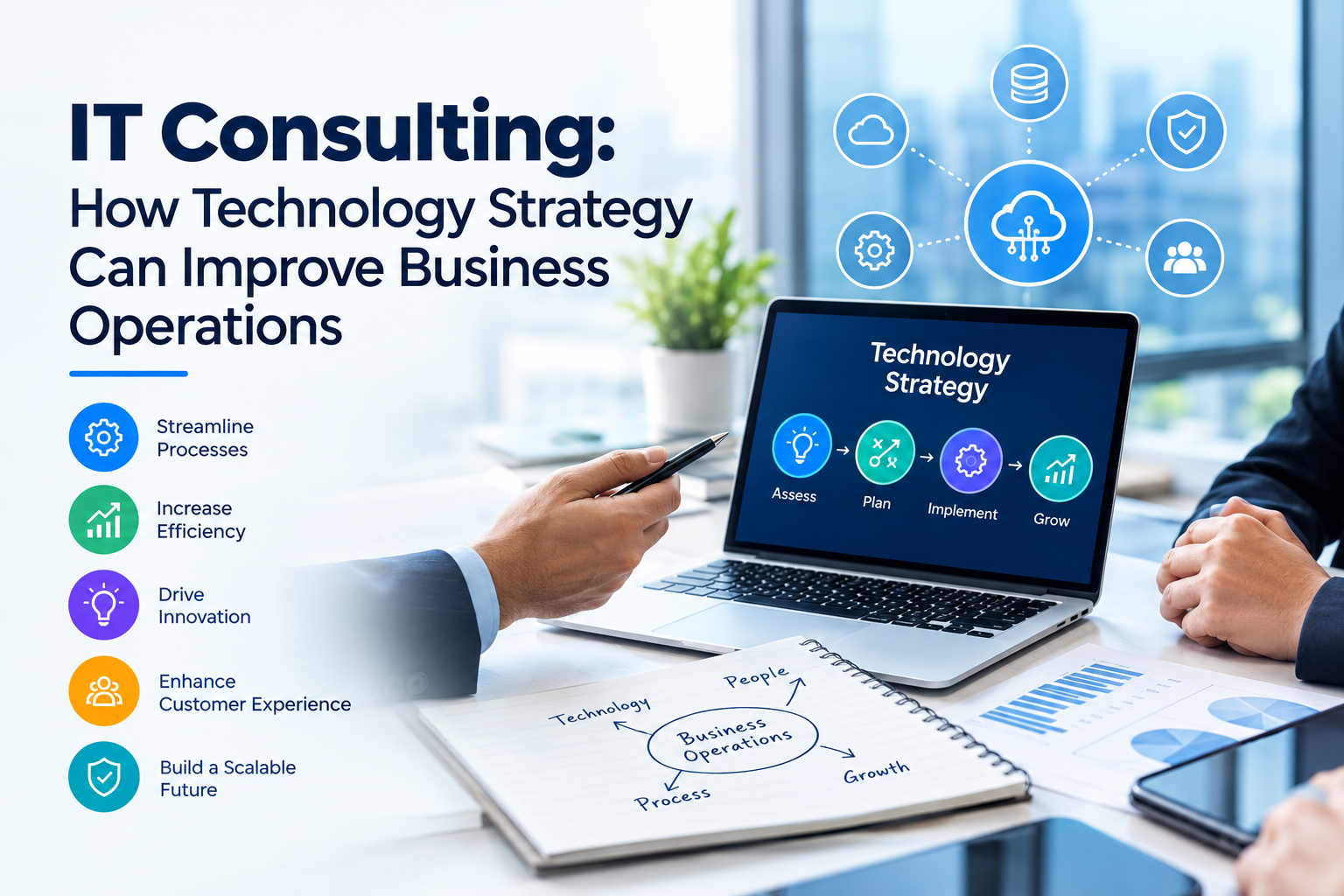
IT Consulting: How Technology Strategy Improves Business Operations
IT Consulting: How Technology Strategy Can Improve Business Operations
Technology has become a critical part of modern business operations. From cloud platforms and business applications to cybersecurity, data management, and automation, organisations increasingly depend on technology to deliver services and remain competitive.
However, simply adopting new technology does not guarantee better business performance. Without a clear technology strategy, businesses can end up with disconnected systems, unnecessary software costs, security risks, inefficient workflows, and difficulties scaling their operations.
This is where IT consulting can provide value. IT consulting helps businesses evaluate their current technology environment, identify operational challenges, and develop technology strategies that support business objectives.
What Is IT Consulting?
IT consulting is a professional service that helps organisations make informed decisions about their technology infrastructure, software, systems, security, and digital processes.
An IT consultant can assess existing systems and recommend improvements based on the organisation's specific requirements.
IT consulting may cover areas such as:
- IT infrastructure
- Cloud solutions
- Software and application systems
- Cybersecurity
- Data management
- Business process automation
- IT system integration
- Technology planning
- Digital transformation
- IT risk management
The objective is to align technology with business requirements rather than adopting technology simply because it is available.
Why Businesses Need a Technology Strategy
Businesses often adopt technology gradually. One department may introduce new software while another uses a different platform. Over time, this can create fragmented systems and inefficient processes.
A technology strategy provides a structured approach to managing these systems.
It can help businesses answer important questions such as:
- Which technologies are currently being used?
- Are existing systems meeting business requirements?
- Where are operational bottlenecks occurring?
- Which processes can be automated?
- Which systems need integration?
- What security risks need attention?
- Which technologies will support future growth?
- How should technology investments be prioritised?
By addressing these questions, businesses can create a technology roadmap based on actual operational needs.
1. Improve Operational Efficiency
One of the key benefits of a well-planned technology strategy is improved operational efficiency.
Manual processes can consume significant employee time and increase the possibility of errors. IT consulting can help businesses identify repetitive activities that may be automated or streamlined.
For example, businesses may be able to improve:
- Data entry
- Reporting
- Customer communication
- Document management
- Approval workflows
- Inventory processes
- Employee onboarding
- Customer support
The goal is not to automate every process. Instead, businesses should identify areas where technology can reduce unnecessary work while maintaining quality and control.
2. Connect Disconnected Business Systems
Many organisations use multiple applications for different business functions, including CRM, ERP, accounting, HR, marketing, inventory, and customer support.
When these systems operate independently, employees may need to transfer information manually between platforms.
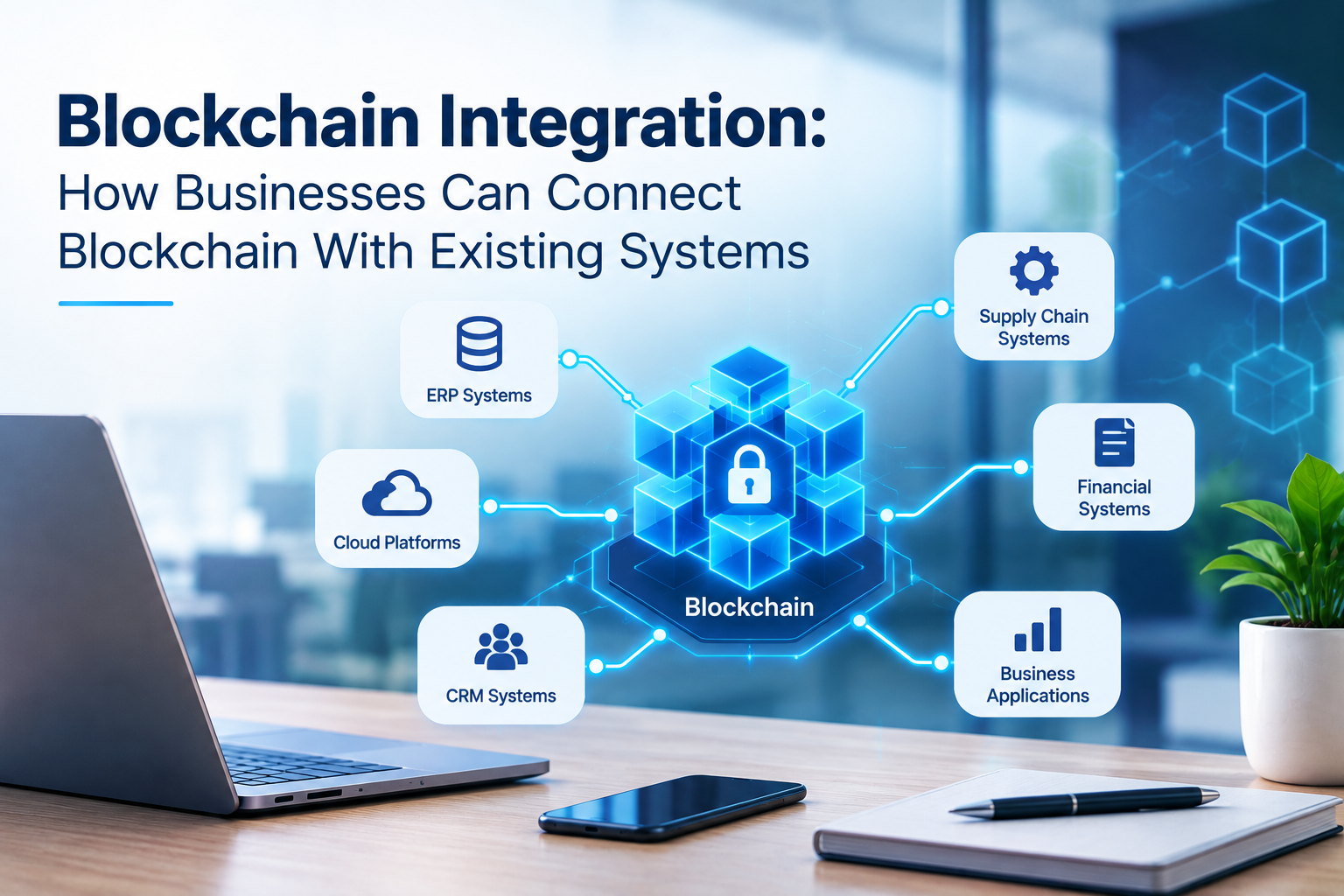
IT consulting can help businesses evaluate integration opportunities and develop a more connected technology environment.
For example:
CRM → API → ERP → Inventory → Accounting
When systems are appropriately integrated, information can move more efficiently between business functions, reducing duplicate data entry and improving visibility.
3. Make Better Technology Investment Decisions
Technology investments can involve significant costs. Purchasing software or infrastructure without understanding the actual business requirement can result in unnecessary expenditure.
An IT consulting approach starts by understanding the business problem.
Before investing in a new technology solution, businesses should consider:
- Current operational challenges
- Expected business value
- Implementation requirements
- Integration needs
- Scalability
- Security
- Maintenance costs
- Employee adoption
- Long-term requirements
This creates a more structured basis for technology investment decisions.
4. Strengthen IT Security
Cybersecurity is an important part of modern technology planning.
Businesses manage customer information, employee data, financial information, intellectual property, and operational systems through digital platforms. Weak security practices can expose organisations to significant operational and financial risks.
IT consulting can help businesses review areas such as:
- Access controls
- Authentication
- Network security
- Data protection
- Backup strategies
- Security policies
- Vulnerability management
- Incident response
- Employee security awareness
Security should be considered throughout the technology lifecycle rather than treated as an isolated IT function.
5. Support Cloud and Infrastructure Planning
Cloud technology can provide businesses with flexible infrastructure and access to a broad range of digital services. However, moving systems to the cloud without proper planning can create new challenges.
A technology strategy can help organisations evaluate:
- Which applications should move to the cloud
- Cloud infrastructure requirements
- Data storage needs
- Security controls
- Backup and recovery
- Performance requirements
- Integration with existing systems
- Ongoing cloud costs
Businesses can then develop a cloud strategy that aligns with their operational and financial requirements.
6. Enable Business Automation
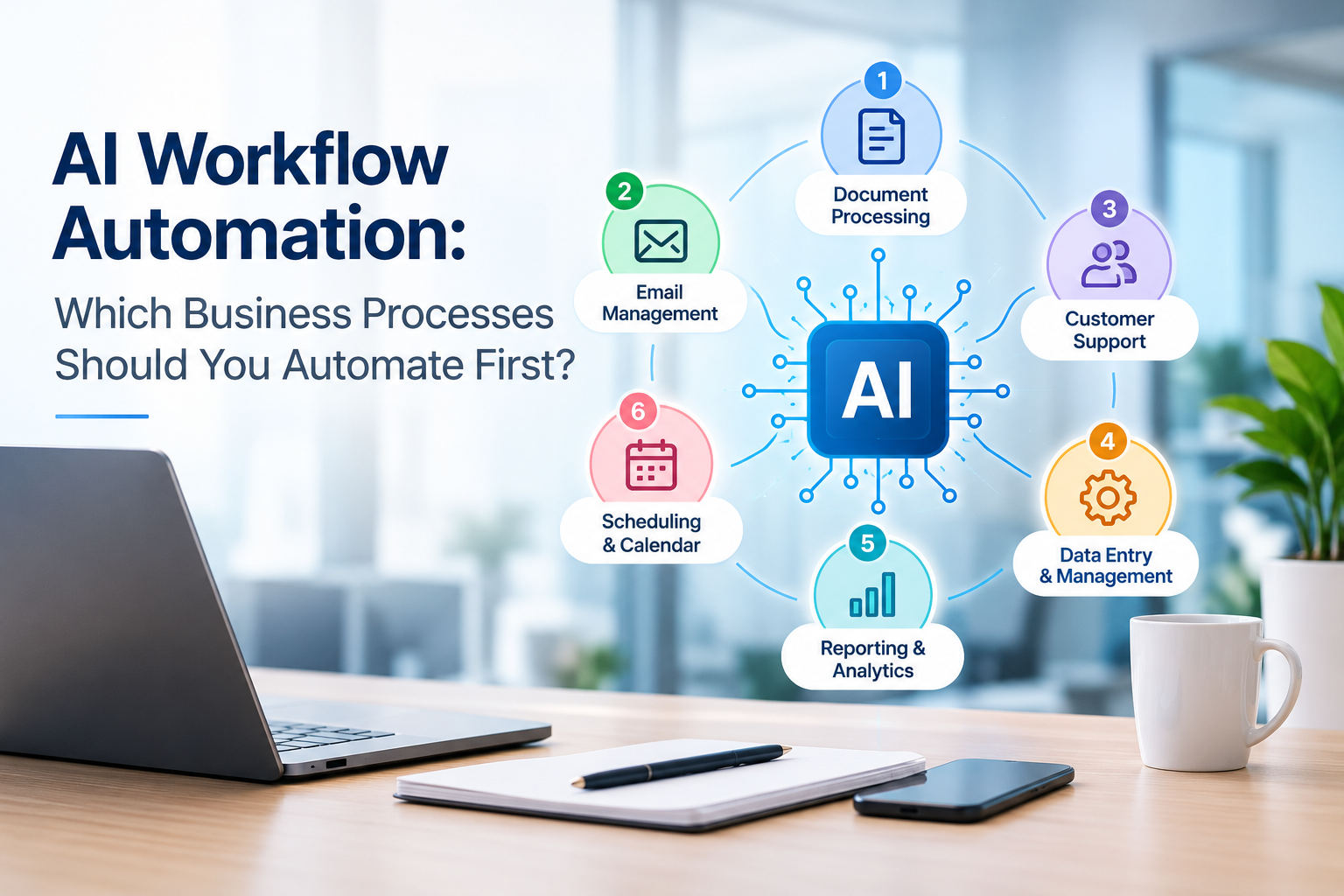
Automation is becoming an important component of modern business operations.
Businesses can use automation to streamline repetitive workflows and improve process consistency.
Potential areas include:
- Customer relationship management
- Lead management
- Invoice processing
- Employee workflows
- Email communication
- Reporting
- Data synchronisation
- Customer support
Automation should be implemented carefully, with clear objectives and appropriate monitoring. Processes should be reviewed before automation rather than simply automating inefficient workflows.
7. Create a Scalable Technology Foundation
A technology environment that works for a small business may not be suitable as the organisation grows.
As businesses acquire more customers, employees, applications, and data, technology requirements also change.
A scalable technology strategy considers:
- Infrastructure capacity
- Application architecture
- Database requirements
- Cloud resources
- Network performance
- System integration
- Security
- Monitoring
- Future technology requirements
Planning for scalability can reduce the need for disruptive technology changes as the business expands.
8. Improve Data and Decision-Making
Businesses generate data from websites, applications, CRM platforms, sales systems, customer interactions, and operational processes.
However, data becomes more useful when businesses can access accurate and relevant information at the right time.
IT consulting can help organisations review their data architecture and identify opportunities to improve:
- Data collection
- Data integration
- Reporting
- Data accessibility
- Information security
- Business intelligence
- Analytics workflows
Better access to reliable information can support more informed operational planning.
9. Support Digital Transformation
Digital transformation is not simply about purchasing new software. It involves improving how technology, people, and business processes work together.
An IT consulting strategy can help businesses create a structured transformation roadmap.
A typical roadmap may include:
Assess → Plan → Prioritise → Implement → Integrate → Monitor → Optimise
This phased approach allows organisations to address high-priority technology challenges while creating a foundation for future improvements.
10. Reduce Technology Complexity
As businesses grow, their technology environments can become increasingly complex.
Legacy applications, duplicate software, outdated infrastructure, and disconnected systems can make IT management more difficult.
An IT consultant can help organisations review their existing technology environment and identify:
- Redundant systems
- Outdated applications
- Integration gaps
- Security weaknesses
- Infrastructure limitations
- Unnecessary technology costs
Simplifying the technology environment can make it easier to manage, secure, and scale.
How to Build an Effective IT Strategy
An effective technology strategy should be connected to business objectives.
A practical process can include:
Step 1: Assess the Current Environment
Review existing infrastructure, applications, systems, data, security, and workflows.
Step 2: Identify Business Challenges
Determine where technology is creating bottlenecks, inefficiencies, security concerns, or unnecessary costs.
Step 3: Define Technology Objectives
Set clear objectives based on business requirements, such as improving efficiency, supporting growth, strengthening security, or integrating systems.
Step 4: Prioritise Projects
Not every technology improvement needs to happen simultaneously. Prioritise initiatives according to business impact, urgency, complexity, and available resources.
Step 5: Create a Technology Roadmap
Develop a practical roadmap showing which projects should be implemented first and how they support longer-term business objectives.
Step 6: Measure and Optimise
Technology strategy should be continuously reviewed. Businesses should monitor performance and adjust their roadmap as requirements change.
Choosing the Right IT Consulting Partner
The right IT consulting partner should understand both technology and business operations.
When evaluating a consulting partner, businesses should consider their experience with:
- Technology strategy
- IT infrastructure
- Software systems
- Cloud solutions
- Cybersecurity
- System integration
- Digital transformation
- Business process improvement
- Technology implementation
- Ongoing IT support
A strong consulting process should begin with understanding the business challenge before recommending a technology solution.
How RIOTECH Softwares Can Support Your Technology Strategy
RIOTECH Softwares provides IT consulting services designed to help businesses evaluate their technology requirements and develop solutions aligned with their operational goals.
From technology planning and infrastructure considerations to software, integration, security, and digital transformation, businesses can use IT consulting to create a more structured approach to technology management.
Explore RIOTECH's IT Consulting Services:
https://riotechsoftwares.com/itconsulting.php
Final Thoughts
Technology can improve business operations, but its effectiveness depends on how strategically it is selected, implemented, integrated, and managed.
IT consulting can help businesses move from reactive technology decisions toward a structured technology strategy. By assessing existing systems, improving workflows, integrating applications, strengthening security, and planning for scalability, organisations can create a technology environment that better supports their business objectives.
For businesses planning their next technology initiative, the first step should not always be choosing a tool. It should be understanding the business problem and determining what technology strategy can solve it effectively.
Frequently Asked Questions
1. What does an IT consultant do?
An IT consultant evaluates an organisation's technology environment and provides recommendations related to systems, infrastructure, security, software, integration, and technology strategy.
2. Why is IT consulting important for businesses?
IT consulting can help businesses identify technology gaps, improve operational processes, manage technology investments, strengthen security, and develop a roadmap for future technology requirements.
3. Can IT consulting help small businesses?
Yes. Small businesses can use IT consulting to select appropriate software, improve processes, strengthen security, plan infrastructure, and avoid unnecessary technology investments.
4. How does IT consulting support digital transformation?
IT consulting can help businesses assess their current systems, identify transformation opportunities, prioritise initiatives, and create a structured technology roadmap.
5. When should a business consider IT consulting?
Businesses may consider IT consulting when they are experiencing technology-related operational challenges, planning digital transformation, replacing legacy systems, integrating applications, improving security, or preparing for growth.